
Read time: 15 minutes
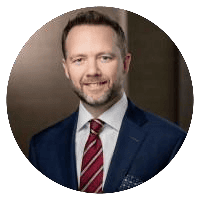
We were pleased to interview Rob Hays, a Board Member and Investor at ExoStat Medical and Presidio Healthcare.
He is currently a private investor in a variety of funds & early to mid-stage private companies across a broad array of industries, including commercial real estate, construction & design, food & beverage and hotel operations, as well as a faithful Catholic husband and father.
There are several aspects of Rob’s story that are meaningful to Catholics and other investment professionals.
A story of trial by fire
Rob started out in finance as the right-hand man for a family-owned hotel company. He was in the midst of working his way up in the company when COVID hit and one day he was spontaneously offered the role of CEO. Revenues were down, the company had gotten some bad publicity, and the stock price had dropped considerably. He confronted overwhelming challenges, but he feels the experience he gained was worth it. He feels it trained him well for making the difficult decisions that leaders often have to make in less than ideal circumstances.
His Faith was a source of strength
As a CEO, Rob is often confronted by things that are out of his control. Not knowing the future can be a tremendous weight for leaders, but Rob learned to rely on his faith in times of uncertainty. He talks about praying the Rosary and attending Mass in his times of stress. He also benefited from being a part of a support group of Christian brothers. He came to accept the idea that failures come and go, but he will always be a son of God and whatever happens he has to stay faithful.
Putting an emphasis on morals and character
Rob talks about the importance that character plays in leadership. Having been in high pressure situations where decisions had to be made, he feels that you should get the highest competency people on your team, because they are more likely to be able to look past the short-term and see the long-term implications on their decisions. He says that given the choice of sound decision-making capability or great market opportunities, he would choose the former. Diligence, according to Rob, isn’t just about the investments; it’s about the people as well.
Transparency plays a big role
If he can’t understand all aspects of the investment with clarity, Rob won’t move forward. He is highly skeptical of situations where you can’t grasp how the investment’s value is being created with total transparency. To gain clarity about risk factors, he looks forward 3-5 years and tries to imagine the deal not working. He then traces back what risks would most likely have led to that.
Navigating the changing methods of communication
Rob describes his experiences as an analyst two decades ago, when he could speak with the fund managers and shareholders directly. Now things are a bit more opaque, where instead of the person making decisions about capital allocations you are talking to a department. Rob navigates the seemingly broken shareholder-management relationship by putting an emphasis on communication and networking, building relationships, and being of service to others involved in the company.
Pursuit of the common good
As a faithful Catholic, Rob is often approached to invest in companies with a faith mission. While he sees it important to support companies with noble intentions, being a Christian or Catholic company should not be the only rationale for the investment.
Competence and track record matter as much as the mission. He pushes back on the assumption that if it’s good for the world, it’s not good for the shareholder. In his view, real value creation over time comes from sustainable business practices that create value for the world and the shareholder alike.
Conclusion
We put together this interview to inspire stronger leadership, sounder decision making, and more of an emphasis on virtue in the investment process. Rob Hays came out on top for a few fundamental reasons: the demand for clarity and transparency in all decisions, the ability to have courage in the face of adversity, and an emphasis on understanding the moral character of those he does business with. His Catholic faith helped him to cope with the uncertainty that dynamic situations can bring. This has helped him not only endure tough times but to eventually achieve favorable outcomes. Rob Hays is an inspiration to other business leaders for what he has done, and what he continues to do.
Interview Transcript
The interview transcript, which has been edited for length and clarity, is below. You’ll read about:
- Being called to the role of first-time CEO for a financially distressed company during COVID, and how he learned what he was made of
- How his prayer life, Catholic support network, and faith in God led him to properly discern in several moments throughout the course of his career when he faced a dilemma
- The challenges that exist in public markets and how he manages it
- His process for thinking backwards through decisions to uncover what the real risks are
- The emphasis on considering the ethics and character of the people involved as leaders in any possible investment before understanding the opportunity itself
- His experience with faith-based investing and why it has to be about more than just religion
- What he reads to stay inspired to follow the highest moral path as a Catholic
Enjoy!
-Logan
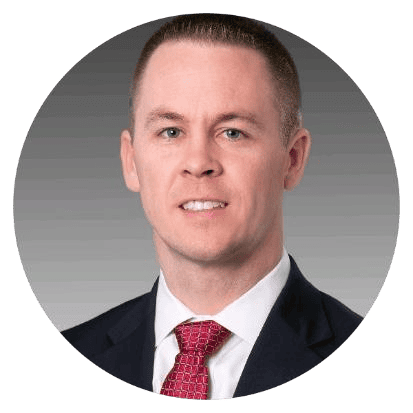
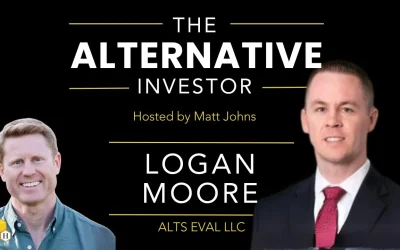
Logan Moore, CFA, CAIA, is a financial advisor and Principal of Alts Eval, LLC, providing investment research and due diligence to investors and RIA firms seeking to invest in illiquid alternatives such as real estate.
Logan Moore: Can you give us a little bit on your background and what you’re doing now?
Rob Hays: I grew up mostly in Oklahoma and was a good high school student and a pretty good golfer, so I made a decision go to Princeton and play division one golf. I spent four years at Princeton and assumed that I was going to go into business.
After college I did investment banking for a couple years with Merrill Lynch doing oil and gas M&A. Enjoyed a lot of it but also was really questioning my vocation in life. So, I ended up doing a three-year detour where I spent two years doing campus ministry and a year and a half studying philosophy in Rome. I was thinking about possibly entering seminary.
I figured out that wasn’t my vocational calling and came back to the States. Shortly thereafter I had a friend from Princeton whose family was in the hotel business and his brother had just taken their family’s hotel company public. They were based in Dallas he said, “Hey, he’s looking for a young finance guy, right-hand man. You should call him up.”
I called him up and he hired me. I think my first title was senior financial analyst and about 15 years later I took over as a CEO of the company. This past summer I finally stepped down from the company after 20 years there. We owned 120-130 hotels all over the US, some in the Caribbean. We actually had three publicly traded companies that were part of the organization, both ownership vehicles that were REITs and then a publicly traded C-Corp that was the asset management company and had all the operations. We did hotel operations management, all the renovation, design, and project management work. In the last year I made the decision to step away from that world for a little bit, predominantly to help my father who is almost 80. He is a CEO of a private medical device company that’s based in Minneapolis. It just got its FDA approval for the device that they’ve been working on for over a decade. I’m an investor in it, so I wanted to make sure that that transaction gets done and goes smoothly. I’m helping him with that right now as well as doing my own family office and private investing.
Logan Moore: Can you talk a little bit more about the path to CEO of a public company, what that was like? I’ve heard you talk about – through your podcast and other places – that decision when you actually took over as CEO. I think that’s a very interesting perspective of the discernment you went through and ultimately how it impacted your life.
Rob Hays: Each company is a little different. Each one has its own culture. Our company was much more entrepreneurial, a little bit more unorthodox and you move the ranks by just being creative, innovative, excellent, and hard-charging. Then as opportunities open, we tended to hire up internally. We found it was sometimes hard to get people to fit our culture, so when we found people that fit, they tended to stay and we tended to really train and promote them as best we could.
So for me, my role initially was interesting because part of my salary was allocated to our public company and part of my salary was allocated to what was then the private company. Eventually, they were all rolled into one public company, but initially it was part private. That allowed me to do stuff on the hotel side, and also stuff on the CEO’s private side. There are all kinds of amazing stories of things I learned and skills I gained but it mostly was trying to make yourself indispensable to your team so that when the opportunities opened up, you were able to take advantage of them.
I ended up getting touching lots of stuff; accounting, finance, capital markets, and the investor relations group. So, I touched lots of different things. What that really helped train me to do is that as a CEO, part of your job is both to cast the vision of where do you think you’re going strategically, and help figure out how to execute, but then once those decisions are made and you’ve gotten buy-in, you’re just making sure everybody’s making progress towards those goals and figuring out what the best way to help all of your individual teammates achieve those goals. It feels like you always have 20 or 30 balls in the air as a CEO and you’re constantly just monitoring to make sure that people are making progress as needed.
Then COVID hit us right at the beginning of 2020, and about that time the CEO had been contemplating what his next steps were at some point in time. When COVID hit, for whatever reason, he made the decision to step aside. The founder of the company who had been the CEO before him called me one day when we were all working from home and he said, “Hey, what are you doing?” and I said, “Well, working on this thing. What’s going on?”
He said, “Well, the CEO just quit and the Board would like to like you to consider taking the role.”
Now at this time, this is the end of the first quarter of 2020. Our revenues in April were down 90, almost 95%. At the worst moment of the financial crisis, our revenues were down about 18%, so this was five times worse than the worst moment of the financial crisis. We had about $4 billion of mortgage debt across our properties on 25+ loans. All of those were in default because cash flow stopped and we couldn’t afford to pay those loans. We had just furloughed or let go over 9,000 of our 10,000 employees and associates across all of our properties.
There was some bad publicity we got and it was a very large dumpster fire at that time. This was the moment that I got asked if I wanted to be the CEO of it! I remember thinking I had worked my way up through the company and I honestly, in my mind for many years, thought that I was going to be capable of leading a team at some point in time, whether it was this company or another company but I always assumed that you get to choose your moment. In this case, I didn’t get to choose my moment; I got picked.
I told my chairman to let me let me pray about it, talk to my family, and I’ll get back to you in the morning. The call that I made was to my father who I’m very close to. My dad’s been in the business world a long time and I think he went through some really difficult times in the 80s when oil crashed, he lost his company and had to dig himself out of a big hole.
I was explaining to him the situation. I said, “Dad, what do you think? I could go get another job. I’m a smart kid. I can figure things out. I feel like I could move on because this is going to be really difficult.” He said two things to me.
The first thing he said was,” You don’t know how jealous I am of you,” and he laughed.
I said, “Dad, you’re not listening to me.”
He goes, “No, because you can’t learn this in a book. You can’t read about a situation like this. You have to go through it in order to learn.”
And then he said, “Every businessperson, at least one time in their career, needs to stare into the abyss to figure out what they’re made of. Welcome to your abyss.”
I ended up making the choice to do it and it was very difficult. The charge that I had from my chairman and my board was to do everything we could to keep us out of bankruptcy – and we were very close to it – and try to give the company a chance to live and fight another day. We had to make some very difficult decisions.
Our stock price got destroyed and has still not really recovered, but we avoided the worst of the outcomes, which was losing everything. It was a very hard test for 4.5 years. I got 30 years of experience in 4.5 years but I’m very grateful for it. I wouldn’t want to do it again in some ways because of the anxiety and the stress. I’m very grateful for it because it’s trained me for whatever the second half of my career ends up being.
Logan Moore: How did your faith factor into that decision outside of just leaning on your dad? I imagine you spent time in prayer and adoration and other things.
Rob Hays: It was one where I had to rely on my faith as I was going through it because so much of the pressure were things not in my control. All I can control are the decisions that I’m making on behalf of my company, whether that’s trying to renegotiate things with our brands or trying to renegotiate things with our lenders.
At that point in time, remember, there was no clarity on how long this was going to last. Was this going to get worse? What were the next variants? People kind of look back now and go, “Oh yeah. It was this little blip.” People forget at the beginning we didn’t really know and so that unknowing of the future was a tremendous weight.
What I ended up having to do was really rely on the habits that I had built up previously. For a while there I couldn’t go to Mass other than watch it on TV, but was attempting to still live some semblance of doing my prayer every day, praying my Rosary every day, the different norms that I try to live every day in my spiritual life. Resting on those and realizing that I have taken those things for granted because it’s only when you’re really in a firefight that you can experience the reality of how much you need those things.
On days where I didn’t pray like I should have or I tried to make excuses, I could physically feel the difference. There were so many nights where I was dealing with insomnia and anxiety. I got in bed at 11:00 and laying there with my eyes wide open till 2:00 in the morning because my brain was racing so hard. All I could do is just get up and grab my Rosary and just walk around the house praying my Rosary until I could hopefully feel tired again.
It was that and the fraternity of other Christian brothers and other guys that I know that I’m close to. All of us in our different industries were going through different things so I had to rely on them, to send out prayer requests to them, to talk to them. There were some people in the community around me as well. But at the beginning when you’re talking about going through something difficult and with your faith, sometimes God calls you to do very difficult things, and you just have to trust that and stay faithful to whatever vocation and calling He gives me.
There’s also other side which is to not be too dramatic and instead ask, “What’s the worst thing that can happen?” You fail. Sometimes failures are the best thing that can happen to you. That’s where you really get to what is your fundamental identity. Is your identity in your financial success or your influence or how people can think about you? It’s really this idea that I am a son or a daughter of God and that’s where my identity fundamentally is.
Failures come and failures go, but all I can do is be faithful today now, here in this moment, and I don’t control the rest.
Logan Moore: Having been somebody who’s led a company in a public market where I imagine you were getting a lot of pressure at times from shareholders who didn’t share your faith, how did that whole experience shape the way that you look at private market companies?
Rob Hays: It was an amazing experience because the reason why you want to be working with people that are high character and high competence is for a lot of reasons. One of the significant reasons is you want people who have the character to do the right thing when really hard decisions must be made.
One thing that I really got to experience through running a large organization through COVID and dealing with lots of counterparties on other sides of the table is that when everything is burning to the ground, you find out very quickly what people actually stand for. I came across a lot of people and a lot of different funds or organizations that I will never do business with ever again because I got to see what the true ethos of those organizations were. There are others that I will do business every single day of the week if I could because I got to see what they were made out of and they were good and true. People I would trust to the ends of the earth.
You can never be perfect. People respond under pressure in different ways but that’s one of the reasons why leadership is so crucial. Really bad decisions can be made. The problem that we all have is that people sometimes think that short-term decisions only have short-term ramifications. I think a lot of the mistakes that I’ve made in my career, or I’ve seen others make in their careers, are ones where you’re making this decision and it seems like maybe it’s the more profitable one. Maybe it’s a little bit more strategic. You can measure it over the short-term, but you really didn’t realize or think about how it would impact others over the long run. You look back and go, “I made that decision not thinking enough about the long-term ramifications to my reputation, to our strategy, to the way this impacts those around us.”
People of higher character and competency can think beyond the short-term materialistic moment, particularly when they’re under pressure. When I’m making an investment decision in a private company, I look at who is making the decisions. I ask myself, “Who are they as an individual?” It is absolutely more important than the unique market opportunity. All those things are important, but I would rather trust the right person to figure something out almost regardless of market opportunities than have all these great market opportunities put my way, but have questionable leadership at the front.
Logan Moore: What’s your process for that? How do you practically vet those people?
Rob Hays: Rarely do I invest in someone that I don’t know at least reasonably well. Part of my due diligence process is just spending time with people. That may mean that I don’t end up investing in say fund one or fund two that they’re doing. I just wait until I feel comfortable with those people. If they are very close to somebody that I know and trust really well, I’m a little bit more cautious and I usually will invest a little bit less until I can catch up to that same level. If I don’t know them and know their story decently well then I usually am on hold for a bit.
Logan Moore: I think that’s a good point. There’s go or no go as far as an investment, but there’s also how do you size that investment based on your comfort level. That’s another lever you can pull when making an investment.
Rob Hays: That’s exactly right. Somebody will bring a deal to me and it’s one of my dearest friends that I invest with often. And this is one of his friends that he’s known for a billion years. This guy’s got a great track record and it’s a unique opportunity. As I get to know them, I may get in and just size it smaller than I have capability to, in order just to see it play out and see what I think. If someone’s successful, there’s always other opportunities. There’s always either another fund or another sidecar. If somebody’s really good at what they do, they tend to find and create opportunities. Very rarely is there the rush to do something. People trying to raise money for a fund want to create a level of urgency to get you to act. I’ve found very rarely are things actually as urgent as it’s portrayed. You get comfortable with the founder, the operator, the sponsor, whoever the important people are.
Logan Moore: What things do you look for next?
Rob Hays: You’re trying to really understand the opportunity. What I have found is most things are understandable. If it doesn’t make intuitive sense and you can’t distill out exactly how that value is being created, I would be really cautious. There’s almost nothing that is that esoteric and so I really want to be able to understand where the value is being created.
An example would be in my own business in the hotel space. Every deal there’s a bet you’re making. The bet might be something as simple as we’re buying this asset at an attractive value. It produces a lot of cash flow above where we think we can get financing and solid market returns and so we think this is just a good solid dividend payer. It may not have a ton of appreciation in the next five years but we’re just going to print some really attractive cash on cash returns and then we’ll either hold it or sell it down the road. That’s an easy-to-understand strategy.
Or it’, “This is an asset, it’s got great dirt, but it’s a dump.” No one has ever put any love into it and we think if we can put in X amount of money, turn it into a luxury hotel, it goes from a nine cap to a six cap, we’re going to realize that cap rate compression and that’s the play.
I’ve invested in different things, in defense tech, in medical devices and things that could seem complicated but at the end of the day the investment thesis is always understandable. I think just understanding what the bet is and if they can’t explain it to me relatively straightforwardly my warning alarms start going off.
The other thing that I always do is understand what the risks are. Something I ask the investors, and it was the same question that I would ask my team when we were looking at any sort of deal, was, “Let’s say you roll forward three years or five years from now and I tell you that this was one of the worst deals that we ever did. It was a terrible deal. We shouldn’t have done it. What are the most likely three, four, five reasons why that would happen?” You probably could come up with 90% of the reasons. We’ll exclude the Earth gets hit by a meteor or something.
Logan Moore: Or a pandemic.
Rob Hays: Or a pandemic, right? There’s the pandemic. But you could understand well there’s changes in interest rates or this market really struggled or the CEO left or whatever it may be. You could come up with the main reasons why this didn’t work and so then I want to solve backwards.
If these are the five biggest risks, how is each of them addressed, mitigated, tracked, how are you ahead of those issues? I found that in most cases, defense against risk or downside risk is every bit as important as the opportunity to upside risk. Sometimes it’s not even really addressing the risk per se. The person running this strategy, running this deal, running this company, is that how they think? If they look at me and go, “Well, I guess this could be a problem and yeah, maybe this might be a problem,” that tells me they haven’t been thinking about it.
I want people that not only come up with the same three or four things that I probably think, but they might say, “Well, there’s also this risk.” I would say, “Oh, I hadn’t even thought about that.” Then if they say, “And there’s this risk.” Well, I hadn’t thought about that either. It’s trying to get in the head and just to make sure that the team that they’ve built is thinking about both the upside and the downside.
The last thing is really on the communication side. This kind of goes with transparency, which I know is a hot button of yours as well. I am shocked at the number of people that invest in a company or a fund and all you get as an investor, a little letter or just your K1 and that’s it. It’s important to me to be kept in the loop. I find communication quality is typically highly correlated with management engagement. What I want to see is if someone deeply understands that they’re supposed to be good stewards of the capital that they’ve been allocated and the trust that they’ve been allocated by their LPs. If so, then it should be translated into how they communicate, the frequency of their communication, the quality of the communication, their openness to conversation. How do they engage with their shareholders or their LPs?
Logan Moore: I 100% agree with you. I’ve heard people – even people who are more experienced – say, “Oh, it’s private. I can’t trade it. I can’t do anything with it anyway, so what do I care? It’s either going to go up or it’s going to go down. I don’t need the reporting.”
My response is, “That’s not my perspective. I want to know.” For the reasons you mentioned and perhaps if you let me know or other investors maybe they can bring resources to help you, right? Nobody can do that if you if you aren’t communicating.
Rob Hays: I think that’s a very broken aspect about the markets in general, explicitly in the public markets. When I started 20 years ago as a little analyst working on investor relations stuff at our public company, I knew all of the fund managers of our top 20 or 25 shareholders. I knew the manager for the Vanguard small cap fund or Wellington’s real estate small cap fund or whoever the big owners were. I knew who the fund manager was. We would talk to him or her at industry conferences every quarter.
We would call them, have a follow-up call, “What’s going on. Hey, we’ve got a deal. We’re coming to market for a secondary follow on. Here’s a deal. Here’s why we like it. Here’s why we think it’s accretive.”
There was a lot of engagement with your shareholders. One of the things that’s happened with the rise of quant and passive and algorithmic trading is that there really isn’t anyone to talk to anymore. At the end of each quarter, I would reach out to the top 20 or 25 investors just to see if they had any questions about the quarter, if they want to talk about what’s going on in the business or industry. By the end, I would be able to reach almost nobody. For some of the big funds, they had a separate line for Blackrock’s shareholder engagement team or whatever, but it wasn’t even the fund manager. You’re just talking to a department.
There’s something broken about the shareholder-management relationship where it’s somewhat anti-human. There’s no actual relationship anymore. It’s just a transaction. I think that’s not healthy. I do think that is something where private markets can be much more human and much more healthy if you have that perspective from both the management or operator and the investor or LP. We’re trying to build something together and we each have unique roles in that, but we’re also humans and we have knowledge bases and experience and relationships that can be of service to one another. When that’s done well, it’s really great. It’s both fun and interesting.
One of the reasons I invest in some of the things that I do is because not only do I know the person who’s running it and they’re super smart and I trust them and their great track record, but sometimes also they’re just doing really interesting things where I can learn. There’s times when they’re calling me to tell me, “Hey, here’s what’s going on with this deal.”
It may be, “Well, I met somebody that you need to talk to over here.” It’s building relationships and being of service to those around you. I just think it’s a better way to do business and I think it leads to something that’s more sustainable, in the long run in the health of a company.
Logan Moore: I’m with you. Part of my push into private markets out of the public side was the transactional nature or the adversarial nature when you get a shareholder activist that comes in and just wants to change the company to drive profits and they don’t care what happens to the company.
Rob Hays: The problem with so much of the shareholder mentality in the public markets and particularly with shareholder activism, not to say there aren’t some good and right ways to do it that can be a very good thing to do at times, but so much of it is just short-term in nature. They really don’t care about the company and many times they’ll cloak themselves in faux virtue. As someone that’s been in numerous activist battles, I can tell you that they actually don’t care at all. All they care about is can they squeeze out a few basis points on their quarterly returns. If they got to the stock price that they wanted, they’d be out of there in two seconds. They have no long-term interest in the employees or the sustainability of the company. They just want to make their money and go. It’s a very unhealthy way.
Then what happens is that you may make changes., You’re making changes that maybe help some short-term profitability, but do you really know what some of those strategic decisions will make you do over the long run?
Logan Moore: What would you say to somebody who wants to get started investing in private markets? What general information would you have for somebody who wants to get involved in this, but is a little nervous.
Rob Hays: My first piece of advice would be to invest side saddle along some people that you trust who have a little bit more experience. It goes back somewhat to investment sizing. You don’t have to start making big bets and the way that you mitigate that risk is probably a few ways. One is invest in areas that you know.
For me, coming from the hotel business, the first investments that I was making on the private side were in my industry and in real estate related industries. If I’m making an investments in a private, self- storage strategy, self- storage is a little bit different than hotels, but it’s still buildings. It’s still real estate. It’s still producing NOI. It’s still producing cash on cash yields. It’s still got supply. It’s all of the same things just wrapped up slightly differently. Make investments tangential to things that you at least understand and grow that way.
The second would be to look for people that you can sit alongside. There have been a good number of people, older guys that I trust and know who brought me into some deals as a way of introducing me to certain groups of people or certain new industries. My due diligence when I was younger was mostly, “Well, what are you doing? What did you think about this? I had this concern. What do you think about that?” You can use others for their expertise.
The last part is just make it small. Don’t risk everything. Make bets that are smaller than you otherwise would do, but it’s still above the minimum. It’s a way to learn because in some ways it’s hard to learn other than by doing yourself.
Logan Moore: How do you think about aligning the Catholic faith with your investments?
Rob Hays: The first on the leadership and management side is, yes I’m trying to invest alongside people that have a common vision of what’s important in life, that are high character, that are going to do the right thing. One danger that exists with that though is I have people that come pitch me to invest in them or their company because of their faith, because they are a Christian or because they are a Catholic, and therefore that is the rationale for the investment. I am amazed at how much mediocrity is attempted to be masked by their faith.
It’s both the high character but also high competency. I want excellence in what you do. As excellent as anyone who is a total pagan. I want someone who is a great executor of their business, of their strategy, and that there’s no sacrifice that’s expected or allowed because of your faith. If anything, you should be doing things with more excellence, with more love, because the thing that you are doing, the business you’re running, the strategy that you’re trying to lead, that is your vocation in life. That is the way that you express love of God. You should be putting your heart and excellence into that. So, one aspect is realize that you don’t have to sacrifice quality for fidelity.
The other side is in the strategy itself. I do care about and invest in businesses and things that at least make the world a better place, that have some concept of the common good. As I think you might have mentioned earlier, I led a series A round of a pro-life health insurance company called Presidio that’s being launched in Texas, hopefully here in the next month or so.
I think there’s a lot of people that if they had a choice of being able to have their insurance plan support certain things versus not, and it was very high quality, that’s what people would choose. That’s something where it ticks my boxes, where I really like the management team, I really like the mission. They had good competency and track record.
One other thing I was going to add is that it also allows me the opportunity to play a role in mentoring and guiding the culture of the company and that management team. That management team is a handful of younger guys that have a lot of experience in their industry, but they’re a few years younger than me. They’ve never run their own company. It’s allowed me to use my friendship with them to also show them how to run a board meeting because they’ve never run a board meeting before. Show them how to think about how they’re communicating with their LPs. Let me serve them by using the gifts and experiences that I have. When you’re looking at an investment and it applies your faith, one question I think you should always ask is, “How can I put myself at the service of others?” Sometimes that’s using your capital, sometimes that’s using your relationships, and sometimes that’s using your wisdom and experience. That’s something that I usually am trying to think about. Can I really be a value add to them because I could just write a check and get my check back in the mail. But if I had my choice, and there’s lots of alternatives out there, there’s a lot of opportunities out there, I would rather have something that is more engaging and that I can be a part of.
Logan Moore: I guess it’d be fair to say then if somebody said, “Oh, I’d love to invest in alignment with my faith” or “I can’t exclude certain companies that violate my faith because then I’d be giving up financial returns”, you would strongly push back on that argument?
Rob Hays: I would push back a thousand times over. Again, I think that is really shortsighted on what real value creation is. Can you create some financial returns over a short period of time by being a shyster and doing bad stuff? You absolutely can. If you’re trying to create not just financial returns, but real value creation over time, you’re going to be doing things that are sustainable for the employees, for the broader economy, for all the various stakeholders involved. If things really want to compound, if you want to compound growth over time, you’ve got to do things the right way.
Logan Moore: Agreed. Anything else that we haven’t talked about that you think would be helpful for people to know?
Rob Hays: Sixteen years ago, I started a group here in Dallas called the Business Ethics Forum where we get together every quarter and I put together a case study, usually something I read in the Wall Street Journal or the New York Times or, some magazine, and we look at a business decision. It could be on hiring or firing or culture or various decisions, and we look at it through the lens of Catholic social doctrine.
The reason I started it is I think people sometimes forget that there are no amoral decisions in business. We are humans. The decisions we make impact humans. People need to take the decisions that they make, even the small ones in their companies, with a certain seriousness, a certain gravity. There are these great principles that are proposed to us, whether it’s the classical virtues or even some of these principles like solidarity or subsidiarity or the common good, that end up being very practical.
I would encourage readers to consider that there are documents out there, like a great one that the University of St. Thomas put out called The Vocation of the Business Leader, that they did I think with a Pontifical Council for Justice and Peace. Or the Compendium of the Social Doctrine of the Church. There are whole sections in there about the role of the economy and the role of business, the role of business management. There are these great resources out there that exist to understand that you’re not alone in making really good business decisions but grounded in serious truths of the human person and the faith that, for me, make business come alive. It’s not this kind of cold, transactional world. It’s a world of creativity and innovation and relationship. That’s what is really fun. There’s a lot out there. To the extent that someone feels like they’re stuck in a rut, where everything’s just financial and transactional, I’d encourage them to dig around a little bit. There are some great things to read.
Logan Moore: Yeah, I agree. I’ve got a whole folder sitting over here on my desk of Catholic Business Resources. It’s that article. It’s Mensuram Bonam for the investment industry. It’s encyclicals. There’s some great stuff.